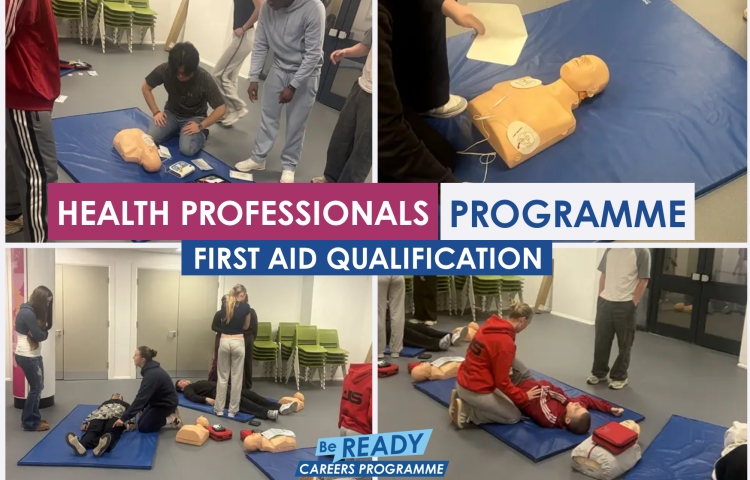
The Gatsby Benchmarks are eight standards that provide a framework for high-quality careers education and guidance. Our BeREADY Careers Programme is aligned with these benchmarks, helping students access the information, experiences and individual support they need to make informed choices about university, apprenticeships and employment.
Explore the eight benchmarks below.
1. A stable careers programme
Every provider should have an embedded programme of careers education and guidance that is known and understood by learners, parents and carers, staff, those in governance roles, employers and other agencies.
2. Learning from career & labour market information
All learners, parents and carers, subject staff and other staff who support learners, should have access to good-quality, up-to-date information about future pathways, study options and labour market opportunities. Young people with special educational needs and disabilities (SEND) and their parents and carers may require different or additional information. All learners will need the support of an informed adviser to make the best use of available information.
3. Addressing the needs of each young person
Learners have different careers guidance needs at different stages. Careers programmes should help learners navigate their concerns about any barriers to career progression. In addition, opportunities should be tailored to the needs of each learner, including any additional needs of vulnerable and disadvantaged learners, and young people with SEND.
4. Linking curriculum learning to careers
As part of the provider's programme of careers education, all subject staff should link curriculum learning with careers, even on courses which are not specifically occupation led. Subject staff should highlight the progression routes for their subject and the relevance of knowledge and skills developed in their subject for a wide range of future career paths.
5. Encounters with employers & employees
Every learner should have multiple opportunities to learn from employers about work, employment and the skills that are valued in the workplace. This can be through a range of enrichment activities, including visiting speakers, mentoring and enterprise schemes, and could include learners' own part-time employment where it exists.
6. Experiences of workplaces
Every learner should have first-hand experiences of workplaces to help their exploration of career opportunities and expand their networks.
7. Encounters with further & higher education
All learners should understand the full range of learning opportunities that are available to them, including academic, technical and vocational routes. This should incorporate learning in schools, colleges, independent training providers (ITPs), universities and in the workplace.
8. Personal guidance
Every learner should have opportunities for guidance meetings with a careers adviser, who could be internal (a member of provider staff) or external, provided they are trained to an appropriate level. These meetings should be available for all learners whenever significant study or career choices are being made. They should be expected for all learners but should be scheduled to meet individual needs. The careers leader should work closely with the careers adviser, SEND coordinator and other key staff to ensure personal guidance is effective and embedded in the careers programme.